Grill: Steaks & BBQ · Red Meat & Cigar Club editorial
Backyard Brisket Basics
The patient man's cook.
Brisket is the patient man's cook — a big, tough cut that can turn into the best thing you've ever eaten or a dry, chewy disappointment. The difference usually comes down to fat, time, and temperature. Here's what's going on inside that slab and how to get it right in the backyard.
Know the cut
Brisket comes from the breast section of the steer, below the chuck. A whole "packer" brisket includes two muscles: the flat (leaner, rectangular, where most slices come from) and the point (thicker, fattier, marbled — the source of burnt ends). The two are separated by a seam of fat. Whole packers commonly run 12 to 18 pounds. Grocery stores often sell just the flat, which is easier to handle but less forgiving because it has less fat.
Brisket is loaded with connective tissue, mainly collagen. Cooked low and slow, collagen breaks down into gelatin, which gives good brisket its moist, tender texture. Cook it hot and fast, and the meat tightens before the collagen has time to render.
Buying
- Look for a flexible brisket that bends when you hold it from the middle — a sign of good marbling.
- A thick, even flat cooks more evenly than one that tapers to a thin edge.
- Higher USDA grades (Choice and Prime) have more marbling and more margin for error.
Trim
Trim the hard fat cap down to about ¼ inch, remove hard fat between the point and flat where you can reach it, and round off thin edges that would burn. Save the trimmings — rendered brisket fat (tallow) is great for wrapping or cooking.
Season
Central Texas tradition calls for little more than coarse salt and coarse black pepper, often in roughly equal parts by volume. Some cooks add garlic powder. Season all sides generously. Salting the night before is fine.
Smoke
- Fire: aim for roughly 225–275°F in the cooker with clean, thin, bluish smoke. Thick white smoke means incomplete combustion and bitter flavors. Oak is the classic wood; hickory and pecan also work.
- Fat side: cooks debate whether to point the fat cap up or down. A common approach is to face it toward the main heat source to shield the meat.
- The stall: somewhere in the 150s to 160s°F internal, the temperature often stops rising for hours. That's mostly evaporative cooling — moisture on the surface evaporating and pulling away heat, much like sweat. It's normal.
- Wrap (optional): wrapping in butcher paper or foil once the bark is set pushes through the stall. Paper breathes and keeps the bark firmer; foil is faster but softens bark. This approach is sometimes called the "Texas crutch."
- Doneness by feel: brisket is done when a probe slides into the thickest part of the flat with little resistance, often somewhere around 200–205°F internal, but texture matters more than the number.
Rest — longer than you think
Resting a brisket lets juices redistribute and the meat relax. Rest at least an hour. Many pitmasters hold briskets wrapped in a dry cooler or a low oven (around 150–170°F) for several hours. A long rest is one of the biggest upgrades a home cook can make.
Slice
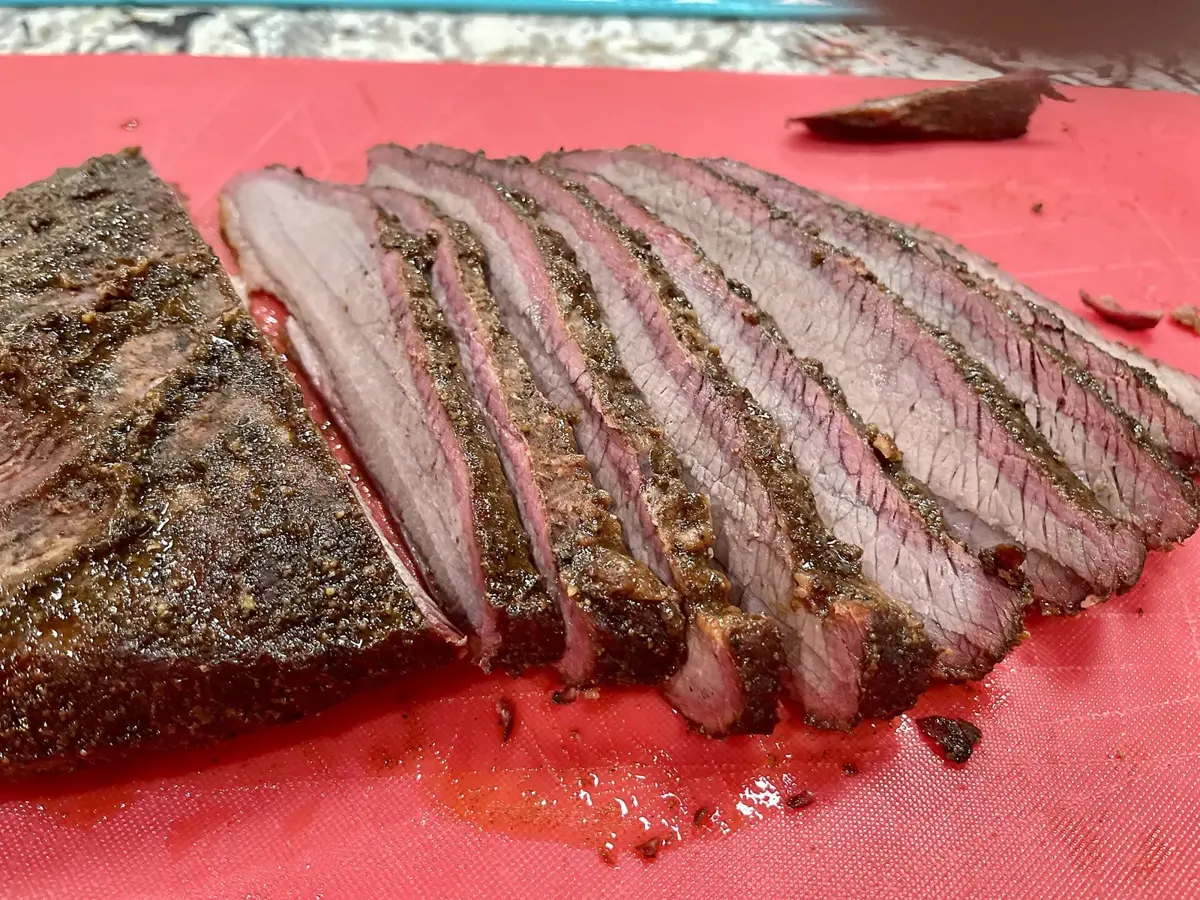
Slice the flat against the grain about the thickness of a pencil. The grain runs in a different direction in the point, so separate the two muscles or rotate the brisket when you reach the point. Slice only what you'll serve; whole brisket holds moisture better than slices.
Timing
A full packer can take 10 to 16 hours or more including the rest. Plan to finish early and hold it; a brisket that's done early is a nice problem, while one that's late means hungry guests.
The smoke ring
The pink band under the bark is a chemical reaction between gases in the smoke and myoglobin in the meat. It looks great but isn't a measure of flavor or doneness. Don't chase it at the expense of tenderness.
Grilling gear we'd recommend (placeholder)
Placeholder — not live affiliate links
- [Instant-read thermometer — retailer placeholder]
- [Kamado / pellet grill — retailer placeholder]
- [Butcher paper & knives — retailer placeholder]
- [Steak delivery service — placeholder]
Affiliate disclosure: Red Meat & Cigar Club may earn a commission from some links on this site at no extra cost to you. Learn more.