Fine Pens · Red Meat & Cigar Club editorial
Nibs & Inks Explained
Steel vs. gold, and how ink choice matters.
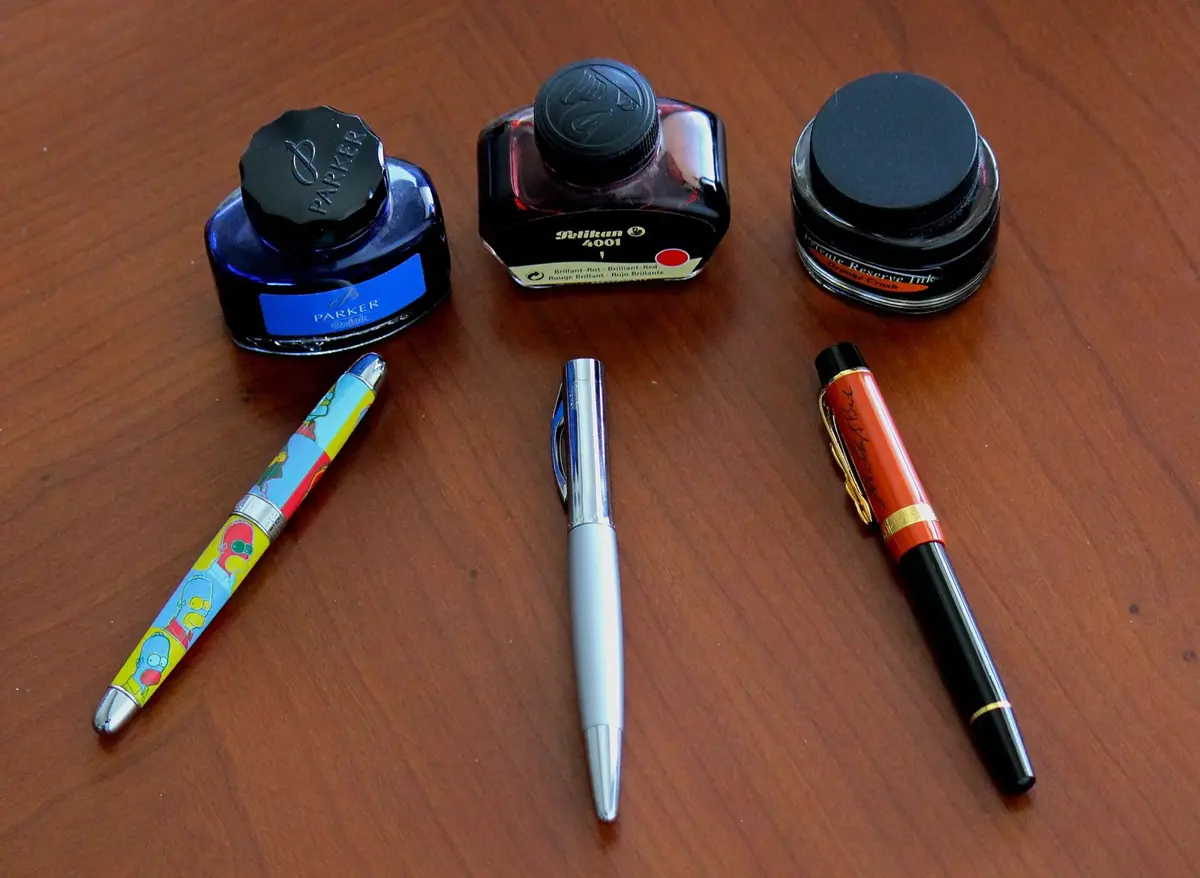
The nib is the heart of a fountain pen, and ink is its soul. Understanding how they work — and how they interact — is the key to finding a pen that writes the way you want.
Nib anatomy
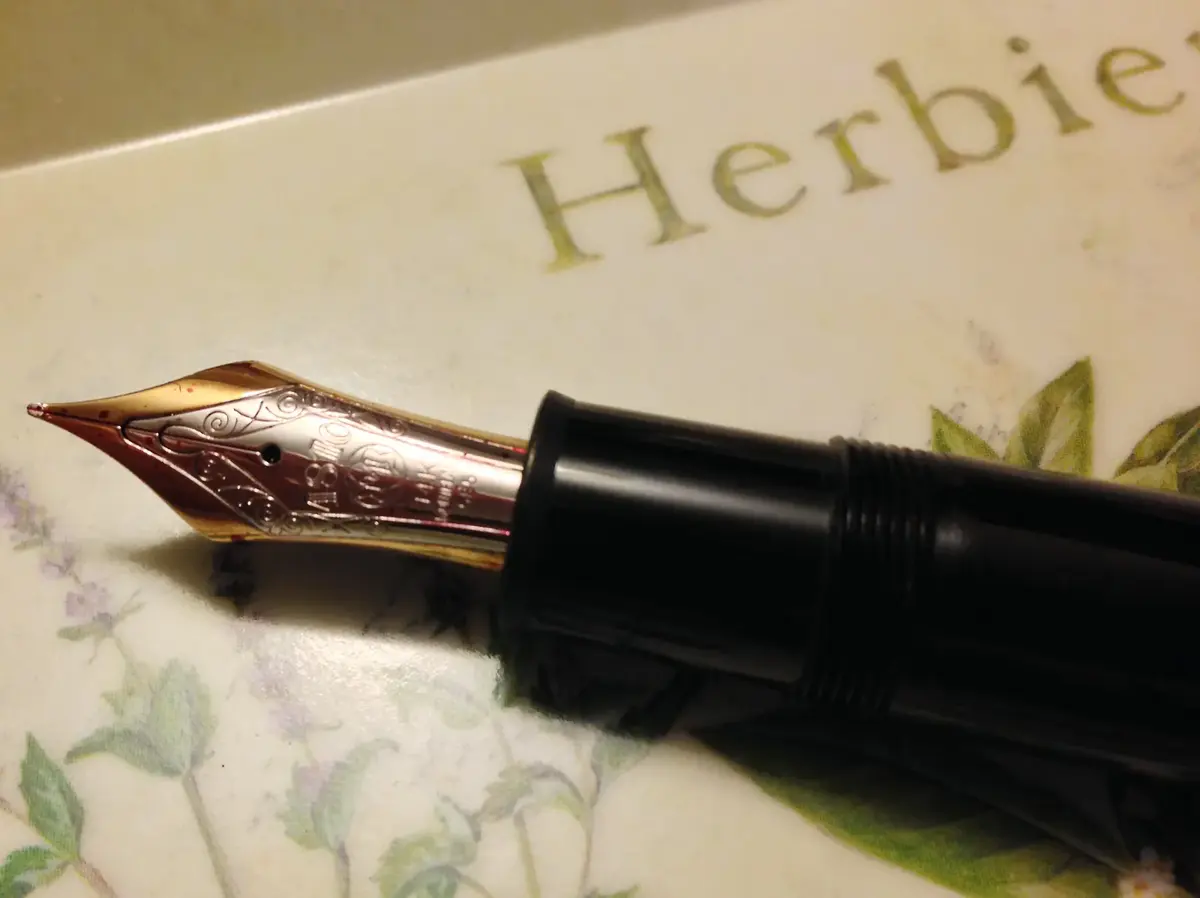
A nib has two tines separated by a slit, which carries ink to the paper by capillary action. At the base of the slit, most nibs have a breather hole that helps relieve stress and can help flow. The very tip is usually a small ball of hard alloy (still often called "iridium," though modern tipping is typically other platinum-group or tungsten alloys) that resists wear. Nibs are often stamped with the maker, nib size, and gold content.
Nib sizes
Common sizes are extra-fine (EF), fine (F), medium (M), broad (B), and double-broad (BB). There's no universal standard. Japanese nibs typically write finer than European nibs of the same label, partly because Japanese writing uses complex characters that need fine lines. If you're used to fine ballpoints, try an EF or F.
Steel vs. gold
Steel nibs are durable, affordable, and can be excellent writers. Gold nibs — usually 14k or 18k, sometimes 21k — resist corrosion and are often described as having more spring or softness, depending on design. Gold doesn't automatically mean better; nib shape, thickness, and tuning matter as much as material. Many people's favorite pens have steel nibs. Some nibs are also plated in rhodium or platinum for color.
Flexibility and grinds
- Firm nibs produce a consistent line — great for everyday writing.
- Soft and semi-flex nibs give slight line variation with pressure.
- Flex nibs spread significantly under pressure for dramatic line variation; common in vintage pens and calligraphy. Pressing a firm nib hard to make it "flex" can damage it permanently.
- Stub and italic nibs are ground flat and wide, producing thick downstrokes and thin cross strokes. Italic edges are sharper and need more care; stubs are rounder and more forgiving.
- Custom grinds from professional "nibmeisters" can tailor a nib to your writing angle and style.
Ink types
- Dye-based inks: the most common. Wide color range, easy to clean, generally safe in any fountain pen. Many are not waterproof.
- Pigmented inks: contain very fine particles that resist water and fading. Some are formulated for fountain pens; they need more regular cleaning.
- Iron gall inks: a historical type that darkens and becomes highly permanent as it oxidizes on paper. Modern formulations are milder than historical ones, but they're acidic and should be flushed regularly.
- Shimmer and sheen inks: contain particles or dye concentrations that produce sparkle or a metallic sheen. Beautiful but can clog pens; flush often.
- Bulletproof and archival inks resist water, bleach, and forgery attempts.
Never use India ink, drawing ink, or calligraphy ink made for dip pens in a fountain pen. These often contain shellac or binders that can permanently clog the feed.
Ink properties
Ink behaviors you'll see discussed include flow (wet or dry), lubrication, dry time, feathering and bleed-through, shading (variation in color intensity within a stroke), and sheen. A wet nib with a wet ink can be luxurious on good paper and messy on cheap paper. Pairing a dry-writing pen with a wetter ink, and vice versa, can balance things.
Mixing and changing inks
Don't mix inks from different brands in a pen without knowing they're compatible; some combinations react. Flush thoroughly when changing colors or brands. See pen care.
Classic and Americana colors
Blue-black has long been the professional standard; historically it was an iron gall ink that wrote blue and darkened to black. Today, many people pick a navy, a deep blue-black, or a classic black for business writing — and something brighter for personal notes.
Pen gear (placeholder)
Placeholder — not live affiliate links
- [Pen retailer — placeholder]
- [Bottled ink — placeholder]
- [Leather pen case — placeholder]
Affiliate disclosure: Red Meat & Cigar Club may earn a commission from some links on this site at no extra cost to you. Learn more.