
Hypercar Reviews · Profile & review in progress
McLaren P1
A hybrid hypercar from McLaren's "holy trinity" era.
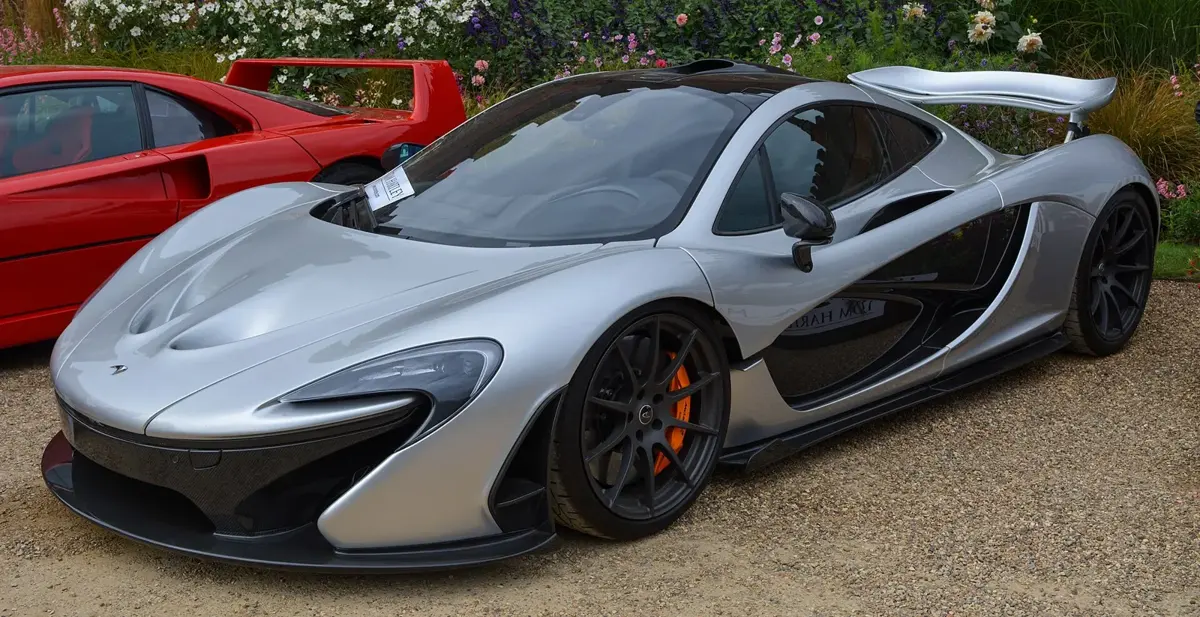
The McLaren P1 was one of the three hybrid hypercars — with the Porsche 918 Spyder and Ferrari LaFerrari — that redefined the top of the car world in 2013. Enthusiasts call them the "holy trinity." Here's the background ahead of our review.
Background
McLaren Automotive's road car heritage traces to the McLaren F1 of the 1990s, designed by Gordon Murray, which was the world's fastest production car when it was introduced. McLaren's modern road-car business launched with the MP4-12C in 2011. The P1 was positioned as the spiritual successor to the F1 — the "P1" name referring to "first position" in racing.
A design concept debuted at the 2012 Paris Motor Show, and the production car was shown at the 2013 Geneva Motor Show. McLaren built 375 production P1s from 2013 to 2015, according to the company.
Powertrain
- Engine: a 3.8-liter twin-turbocharged V8.
- Electric motor: integrated with the gearbox, adding torque fill and a short electric-only range.
- Combined output: 916 PS (903 hp) and 900 Nm of torque, per McLaren.
- Transmission: seven-speed dual-clutch, rear-wheel drive.
McLaren's approach used the electric motor to fill gaps in turbo boost and sharpen throttle response, an idea drawn from Formula 1's energy-recovery systems.
Performance and engineering
- Acceleration: McLaren quoted 0–100 km/h in 2.8 seconds and 0–300 km/h in under 17 seconds.
- Top speed: electronically limited to 350 km/h (217 mph).
- Chassis: carbon-fiber "MonoCage" tub.
- Aerodynamics: an active rear wing and adjustable aerodynamics; in Race mode, the car lowers and the wing extends to generate up to 600 kg of downforce, per McLaren.
- DRS: a Formula 1-inspired drag reduction system flattens the wing at the press of a button.
Variants
The P1 GTR was a track-only version with around 1,000 PS, sold to owners with a driver program. Lanzante later converted some GTRs for road use. McLaren Special Operations also created custom-specified cars.
Legacy
McLaren followed the P1 with the Senna (2018) and the Speedtail (2020), a three-seat hyper-GT echoing the F1's central driving position. In 2024, McLaren unveiled the W1 as the P1's successor at the top of its range.
What we'll evaluate
- Performance: acceleration, braking, track capability.
- Engineering: hybrid system, aero, chassis.
- Design: exterior, interior, materials.
- Rarity: production numbers and market.
Ownership notes
As an early high-performance hybrid, the P1's battery and hybrid systems require specialist attention. McLaren offers programs for its legacy and special cars. Values depend on specification, history, and mileage.
Status
No ratings have been assigned. This is a profile until the hosts have meaningful time with the car.
The trinity comparison
The P1, Porsche 918 Spyder, and LaFerrari arrived within a year of one another, each with a different philosophy. Porsche used all-wheel drive and a plug-in hybrid with meaningful electric range; Ferrari paired a high-revving naturally aspirated V12 with a performance-focused hybrid; McLaren combined twin-turbo power with electric torque fill and aggressive aerodynamics. Comparisons in the motoring press at the time debated which was best; most concluded that each excelled in its own way.
Ratings
Ratings are editorial opinions and will be added once the hosts have spent time with this car. No scores have been assigned yet.
The verdict
Coming soon.
Where to find it (placeholder)
Placeholder — not live affiliate links
- [Retailer / dealer placeholder]
Affiliate disclosure: Red Meat & Cigar Club may earn a commission from some links on this site at no extra cost to you. Learn more.