
Pen Reviews · Profile & review in progress
Lamy 2000
A minimalist 1966 design in Makrolon and brushed steel.
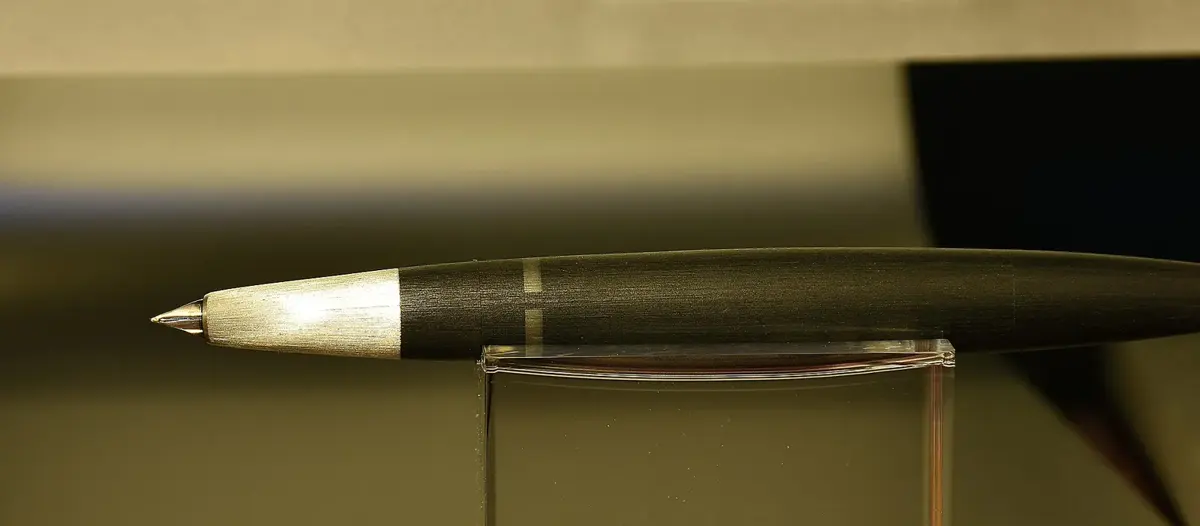
The Lamy 2000 looks like it could have been designed last year. In fact, it launched in 1966, and it has stayed in production with minimal changes ever since — a testament to a design that got it right the first time. Here's the background ahead of our review.
History
Lamy is a family-owned company based in Heidelberg, Germany, founded in 1930 by C. Josef Lamy (the company began as the Orthos pen company and later adopted the Lamy name). In the 1960s, the founder's son, Manfred Lamy, commissioned designer Gerd A. Müller, who had worked for the appliance maker Braun, to create a new kind of pen. The result, the Lamy 2000, was intended to look ahead to the year 2000. It is often cited as a landmark of German industrial design influenced by Bauhaus principles: form follows function, no unnecessary ornament.
The Lamy 2000's success shaped the company's design-led identity, which continued with the Safari in 1980 and later models.
Design and specifications
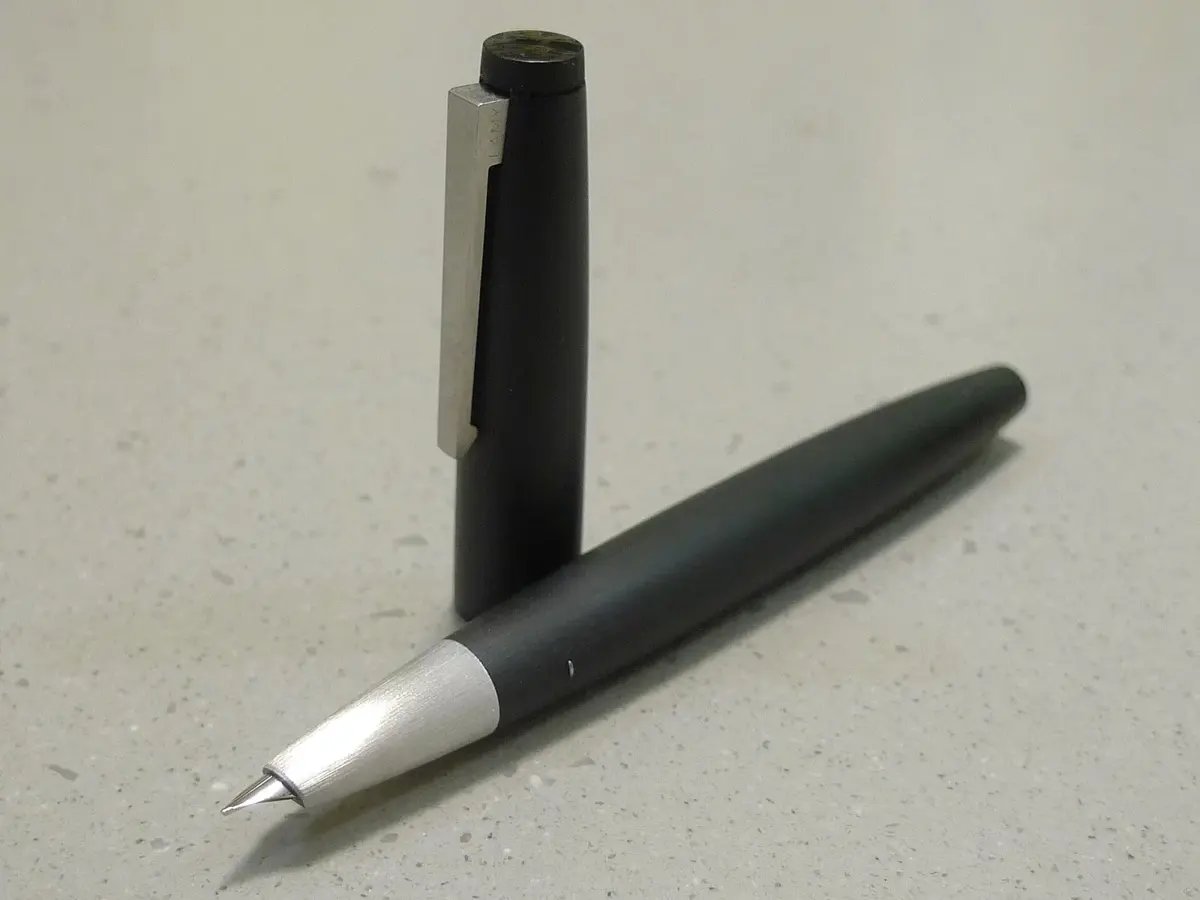
- Materials: the body is fiberglass-reinforced Makrolon, a polycarbonate, with a brushed finish that gives a fine, wood-like texture. The cap and piston knob join the body almost seamlessly. Trim and clip are brushed stainless steel.
- Clip: a solid, spring-loaded stainless steel clip.
- Filling system: piston filler, operated by twisting the end of the barrel, with small ink windows near the section.
- Nib: a semi-hooded 14-karat gold nib with platinum coating, in sizes from extra-fine to broad, plus oblique options. Most of the nib is hidden by the section, which helps prevent drying.
- Weight: light for its size, comfortable for long writing sessions.
Why it matters
The Lamy 2000 offers a gold nib and piston filling at a price well below many luxury flagships, wrapped in a design that's endured for nearly six decades. It's often recommended as a first "serious" fountain pen and is also beloved by experienced collectors.
Known quirks
- Nib sweet spot: the 2000's nib tipping is shaped in a way that many owners describe as having a smaller sweet spot than some pens, which may not suit writers who rotate their pens.
- Grip "ears": two small metal tabs near the section hold the cap in place; some writers notice them under their fingers.
- Nib variation: as with many pens, individual nibs can vary; buying from a retailer that tests nibs, or trying one in person, can help.
What we'll evaluate
- Design: materials, finish, and how the minimalist look wears over time.
- Writing feel: smoothness, flow, sweet spot, and nib character.
- Build quality: piston action, durability of Makrolon and steel, cap security.
- Value: compared to other gold-nib piston fillers.
Alternatives
Other pens in a similar zone include the Pilot Custom 74 and Custom 743, Platinum 3776 Century, TWSBI's piston fillers (with steel nibs), and Pelikan's M200 and M400.
Status
No ratings have been assigned. We'll score the Lamy 2000 only after real-world use.
Design legacy
The Lamy 2000 is often discussed alongside other landmarks of mid-century German industrial design, including Braun's products of the same era, where Gerd A. Müller also worked. Its brushed finish and hidden piston knob reflect the same philosophy: an object whose form comes from how it works. Lamy has also made matching ballpoints, rollerballs, and mechanical pencils, as well as occasional special-edition finishes.
Ratings
Ratings are editorial opinions and will be added once the hosts have spent time with this pen. No scores have been assigned yet.
The verdict
Coming soon.
Where to find it (placeholder)
Placeholder — not live affiliate links
- [Retailer / dealer placeholder]
Affiliate disclosure: Red Meat & Cigar Club may earn a commission from some links on this site at no extra cost to you. Learn more.