
Watches · Red Meat & Cigar Club editorial
American Watchmaking Heritage
Railroad watches to the moon.
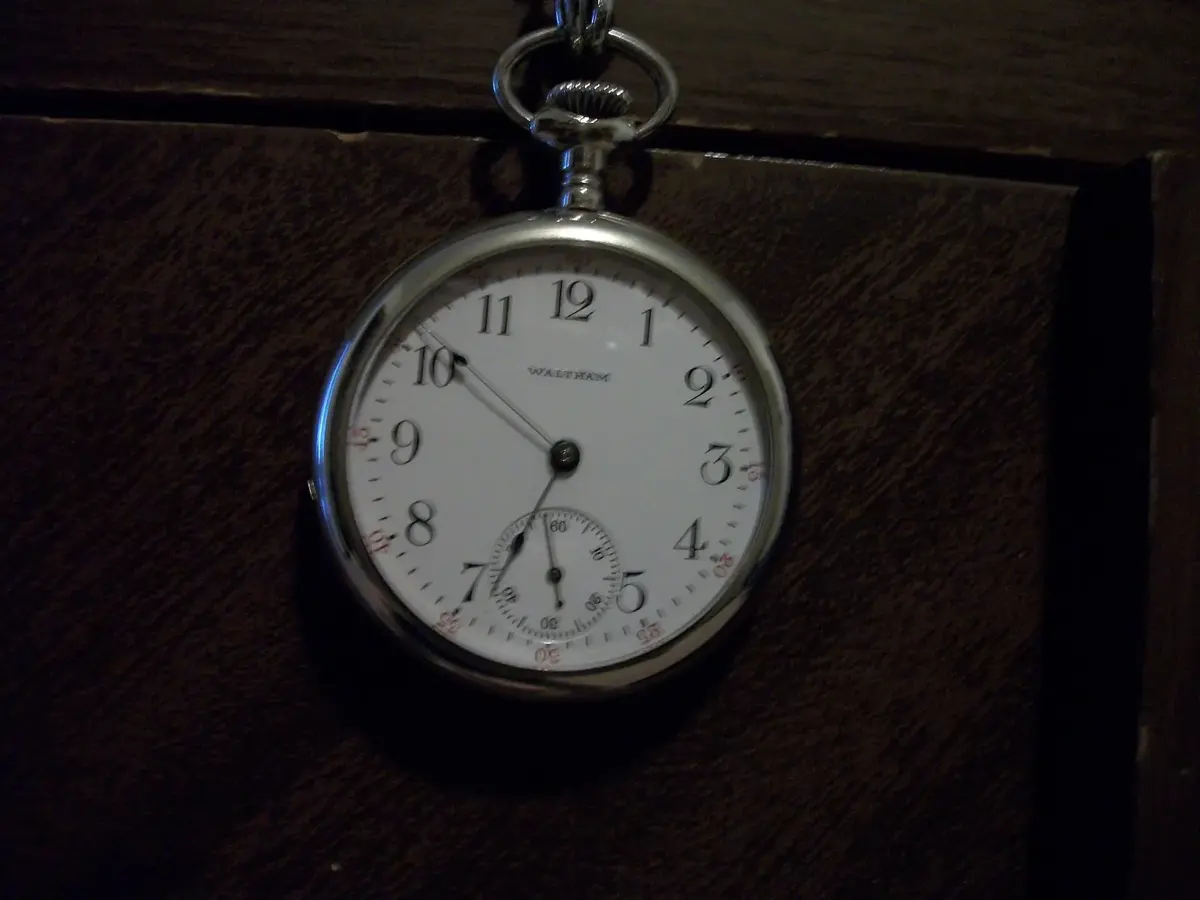
Today, luxury watches are associated with Switzerland, Germany, and Japan. But for a stretch of the 19th and early 20th centuries, the United States transformed how watches were made — and American railroad watches set standards for precision that the world noticed.
Waltham and the American system
Before the mid-1800s, watches were largely made by hand, with parts individually fitted. In 1850, Aaron Lufkin Dennison and partners began the venture that became the American Waltham Watch Company in Waltham, Massachusetts. Their idea was to apply the "American system of manufacturing" — machine-made, interchangeable parts, pioneered in firearms production — to watches. Waltham became one of the largest watchmakers in the world. At the 1876 Centennial Exposition in Philadelphia, Waltham's machine-made watches impressed Swiss observers so much that it helped spur modernization of Swiss watch manufacturing.
Other American companies followed, including the Elgin National Watch Company in Illinois, which also became one of the world's largest producers.
Railroad watches: precision as a safety issue
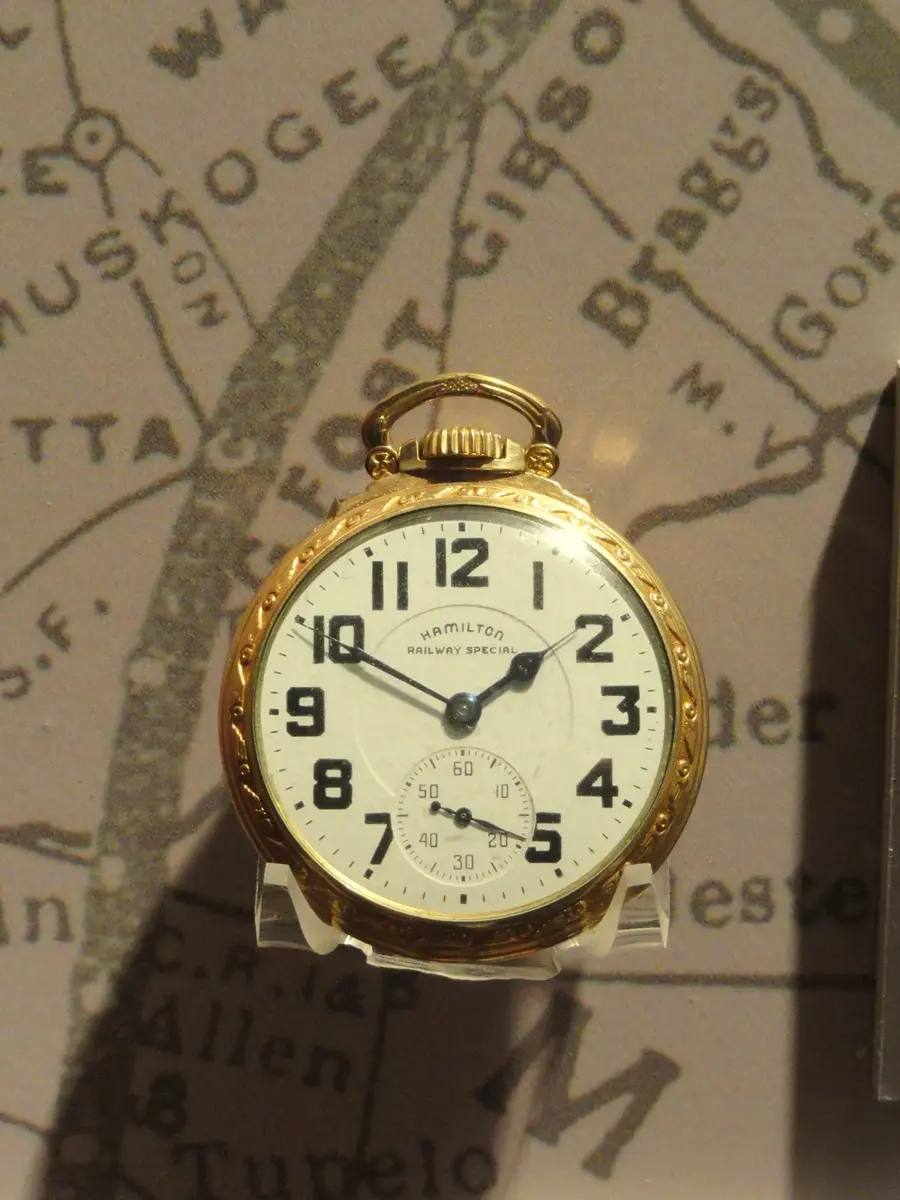
As railroads expanded, timekeeping became a life-and-death matter, because trains on single tracks relied on schedules to avoid collisions. After a deadly 1891 collision at Kipton, Ohio, attributed in part to a conductor's watch that had stopped and restarted, railroads adopted strict standards for watches carried by employees. Requirements developed by Webb C. Ball, who was appointed to oversee timekeeping for several railroads, and similar standards from the railroads themselves typically specified open-face pocket watches with a minimum number of jewels (17 or more), adjustment for temperature and positions, lever setting (to prevent accidentally changing the time), and accuracy to within about 30 seconds a week, with regular inspections.
Hamilton
The Hamilton Watch Company was founded in Lancaster, Pennsylvania, in 1892 and became one of the most respected makers of railroad-grade watches; its 992 series became especially well known. Hamilton supplied large numbers of watches and timepieces to the U.S. military in World War II, including marine chronometers. In 1957 it introduced the Hamilton Electric 500, often described as the world's first battery-powered wristwatch. Hamilton later moved operations to Switzerland and is today part of the Swatch Group, while keeping its American heritage in its branding.
Bulova and the Accutron
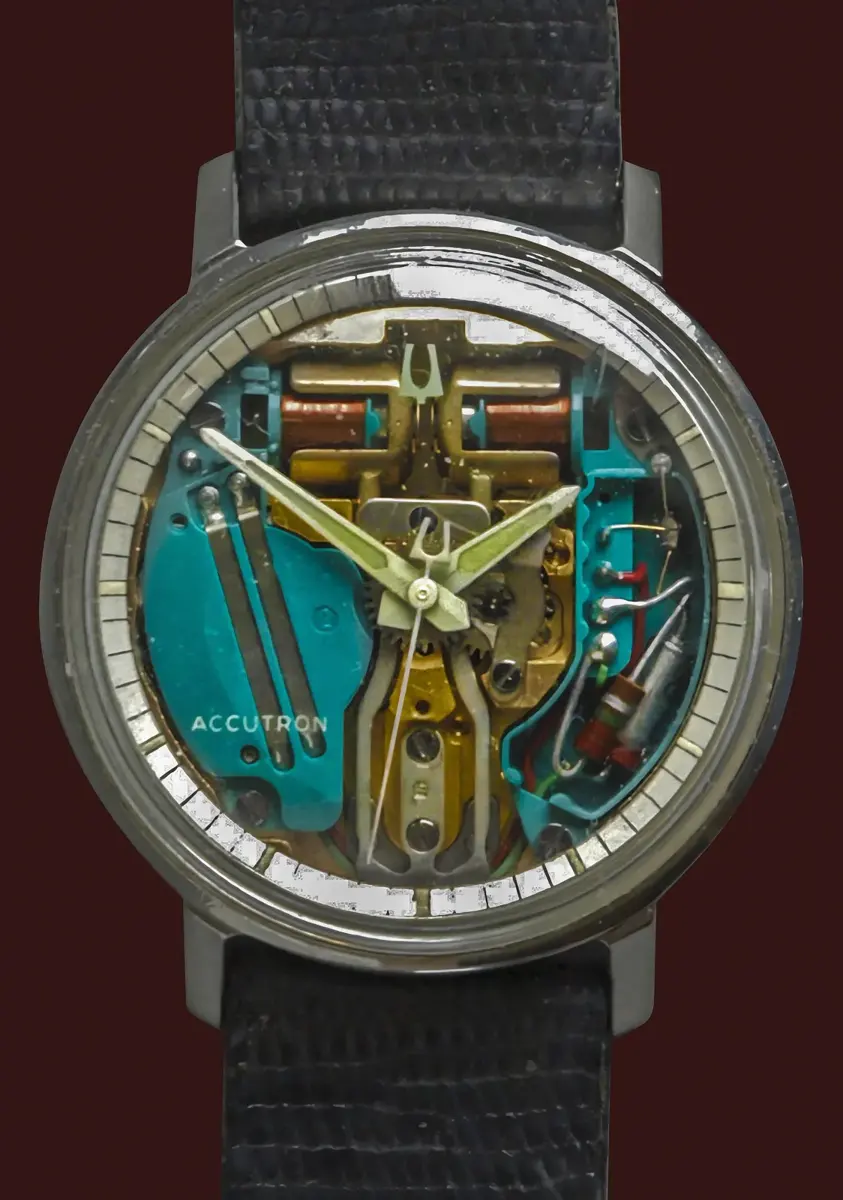
Joseph Bulova founded his company in New York City in 1875. Bulova became famous for marketing innovations — including what is often cited as the first televised commercial in the U.S., a 1941 Bulova clock ad. In 1960, Bulova introduced the Accutron, which used a vibrating tuning fork instead of a balance wheel and was far more accurate than mechanical watches of its time. It produced a faint hum instead of a tick. Accutron timing technology was used in NASA's space program. Bulova is now owned by Japan's Citizen Watch Co.
The decline
Several forces brought American watchmaking down: competition from Swiss makers with lower costs and strong marketing, wartime disruption of consumer production, and finally the "quartz crisis" of the 1970s and 1980s, when inexpensive quartz watches from Japan and elsewhere upended the industry. Waltham ceased American watch production in the 1950s, and Elgin closed its Illinois factory in the 1960s.
A modest revival
Recent years have seen renewed interest in American watchmaking. Several small companies now assemble watches in the U.S., and a few are working to manufacture components domestically, which is far more difficult. Independent American watchmakers have also drawn attention in the collector world. Labels like "assembled in USA" and "made in USA" have specific legal meanings under Federal Trade Commission rules, so read the fine print.
Collecting American watches
Vintage American pocket watches, especially railroad grades from Hamilton, Waltham, Elgin, Illinois, and Ball, are a popular and relatively affordable collecting field. Serial numbers can usually be looked up to determine production date and grade. As with any vintage watch, condition, originality, and service history matter. Have a watchmaker inspect and service one before relying on it.
Watch gear (placeholder)
Placeholder — not live affiliate links
- [Watch roll / case — placeholder]
- [Watch winder — placeholder]
- [Authorized dealer / pre-owned retailer — placeholder]
Affiliate disclosure: Red Meat & Cigar Club may earn a commission from some links on this site at no extra cost to you. Learn more.