
Cars · Red Meat & Cigar Club editorial
Why Mid-Engine Layouts Matter
Weight, balance, and handling.

Look at almost any supercar or hypercar and you'll find the engine sitting behind the seats. Since the C8 generation arrived for 2020, that includes the Chevrolet Corvette. Why do designers go to the trouble? The answer is weight distribution, and it's worth understanding.
What "mid-engine" means
In a mid-engine car, the engine sits between the driver and the rear axle. (Technically, a front-mid-engine car has the engine behind the front axle but ahead of the driver — a layout used in many front-engine sports cars.) Most people use "mid-engine" to mean rear-mid: the engine behind the cockpit and ahead of the rear wheels.
Compare that to front-engine cars, where the engine sits over or ahead of the front axle, and rear-engine cars like the Porsche 911, where the engine hangs behind the rear axle.
Why it helps handling
The engine is usually the heaviest single component in a car. Placing it near the center does two things:
- Lower polar moment of inertia. With mass concentrated in the middle, the car resists changes in direction less, like a figure skater pulling in their arms to spin faster. The car turns in quickly and rotates readily.
- Rear weight bias for traction. More weight over the rear wheels helps put power down when accelerating. That's one reason the mid-engine Corvette could launch dramatically quicker than its predecessors.
Mid-engine cars also allow a low hood and nose, improving visibility and aerodynamics, and they leave room to channel air to rear-mounted radiators and intercoolers.
The trade-offs
- Space: the engine takes up room that could be cabin or cargo space. Many mid-engine cars have small "frunk" storage up front and limited room behind the seats.
- Behavior at the limit: the same agility that makes mid-engine cars quick to turn can make them snap into oversteer if pushed past the grip limit. Modern stability control and tire technology have reduced, but not eliminated, this.
- Serviceability and cost: engines can be harder to reach, and complex packaging adds cost.
- Noise and heat close to the occupants require extra engineering.
A short history
Mid-engine racing cars date back to the prewar Auto Union Grand Prix cars of the 1930s. Cooper's rear-engine Formula 1 cars won championships in 1959 and 1960, and by the mid-1960s virtually every top open-wheel racer was mid-engine. Ford's GT40 won Le Mans four times in a row from 1966 to 1969. On the road, the 1966 Lamborghini Miura is often called the first supercar and popularized the mid-engine layout for road cars. Ferrari, Lamborghini, McLaren, and others have since made mid-engine designs their standard formula.
The Corvette's big switch
Corvette engineering legend Zora Arkus-Duntov advocated for a mid-engine Corvette as far back as the 1960s, and Chevrolet built several mid-engine concept and experimental cars over the decades. It finally happened with the 2020 C8 Corvette Stingray, which put a 6.2-liter V8 behind the seats. Chevrolet quoted 0–60 mph times under 3 seconds for the base Stingray with the Z51 package — remarkable for its price. The C8 lineup has since expanded to the Z06, the hybrid all-wheel-drive E-Ray, and the ZR1.
Is mid-engine always better?
No. Great sports cars use every layout. The front-engine Mazda MX-5 Miata and Corvettes before the C8 achieved excellent balance with their engines set back behind the front axle. The rear-engine Porsche 911 has been refined for decades into one of the most capable sports cars ever built. Layout is one tool among many, along with suspension design, tires, weight, and aerodynamics.
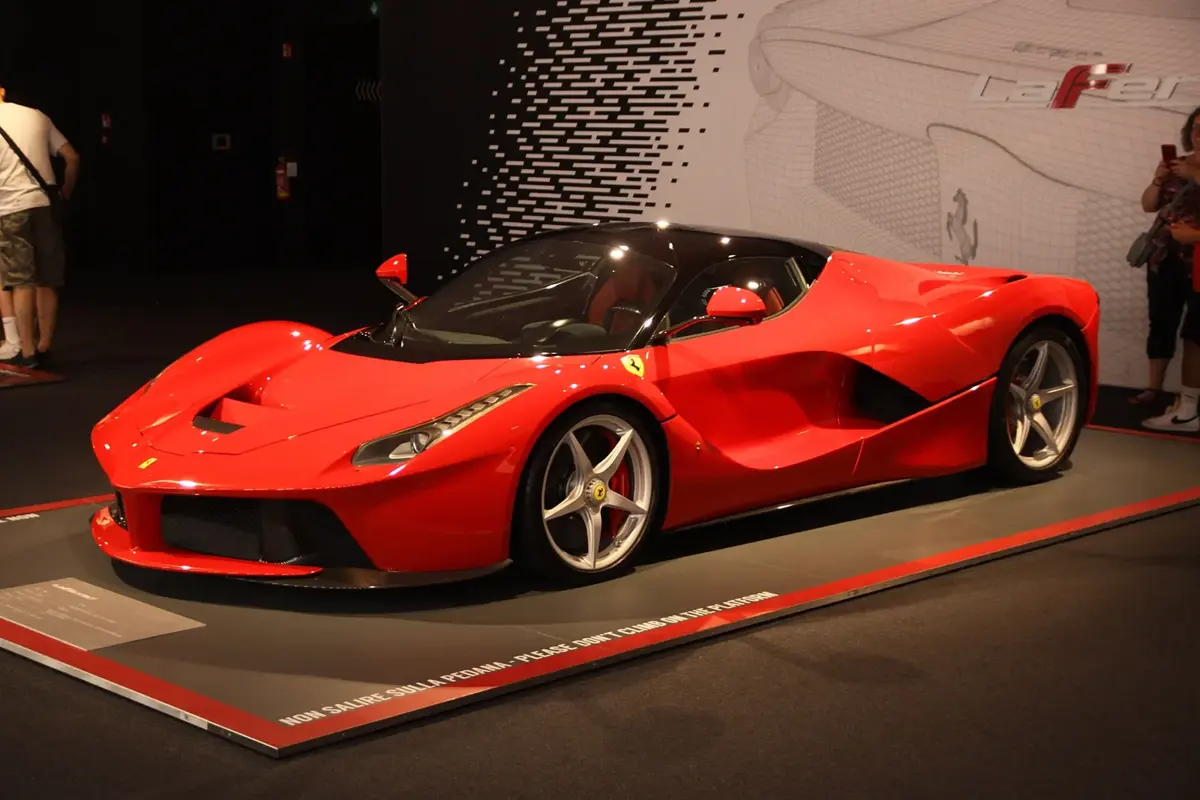
For the ultimate expression of mid-engine design, see our hypercar entries on the Bugatti Chiron, McLaren P1, and Ferrari LaFerrari.
Garage gear (placeholder)
Placeholder — not live affiliate links
- [Battery maintainer — placeholder]
- [Detailing kit — placeholder]
- [Classic car insurance quote — placeholder]
Affiliate disclosure: Red Meat & Cigar Club may earn a commission from some links on this site at no extra cost to you. Learn more.