Grill: Steaks & BBQ · Red Meat & Cigar Club editorial
The Reverse-Sear Steak Guide
Low heat first, hard sear last — for thick cuts.
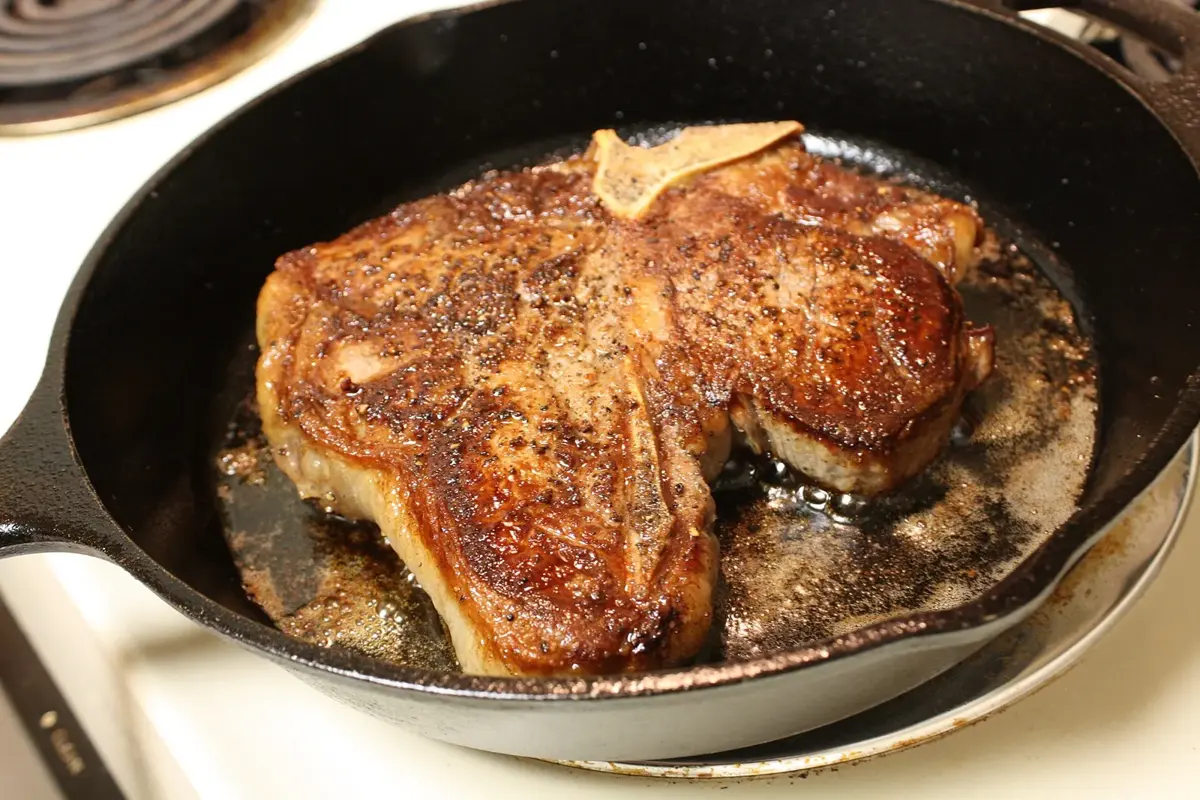
If you've ever cut into a thick steak and found a gray band a quarter-inch deep surrounding a small pink center, the reverse sear is your fix. Instead of searing first and finishing gently, you cook the steak slowly to just below your target temperature, then hit it with very high heat at the end. The result: even doneness from edge to edge and a deeply browned crust.
Why it works
Meat cooks from the outside in. Over very high heat, the exterior overshoots long before the center arrives, creating that gray band. Low heat narrows the temperature difference between surface and center, so the whole steak comes up evenly. The slow phase also dries the surface, and a dry surface browns faster and better when it finally meets high heat. Browning — the Maillard reaction — happens far more efficiently on a dry surface than a wet one.
Which steaks
The method shines on thick cuts, roughly 1½ inches and up: ribeye, New York strip, porterhouse, T-bone, thick filets, and the showpiece tomahawk. Thin steaks (under an inch) cook through so quickly that a straight hot sear works better. Ask the butcher to cut thicker if needed; see our guide to steak cuts.
What you need
- A grill you can set up with two zones (charcoal piled on one side, or gas with burners on one side only) — or an oven, smoker, or pellet grill for the slow phase.
- A screaming-hot surface for the sear: the hot side of a charcoal grill, a cast-iron skillet, or a gas grill on maximum.
- An instant-read thermometer. This is non-negotiable; timing alone isn't reliable.
- Coarse salt and pepper.
Step by step
- Salt early. Ideally salt the steak 1 to 24 hours ahead and leave it uncovered on a rack in the refrigerator. The salt draws out moisture, dissolves, and is reabsorbed, seasoning the meat more deeply and leaving a drier surface. If you can't, salt just before cooking — the in-between window of about 10 to 40 minutes is when the surface is wettest.
- Slow phase. Cook on the cool side of the grill or in an oven or smoker at roughly 225–275°F. Lid down. A 1½-to-2-inch steak often takes 30 to 60 minutes depending on heat and thickness.
- Pull early. Remove the steak about 10–15°F below your target. For a medium-rare finish around 130–135°F, pull around 115–120°F.
- Get the sear surface ripping hot. Open the vents, crank the burners, or heat the cast iron until it's smoking lightly.
- Sear hard. 45 to 90 seconds per side, flipping as needed, plus a quick turn on the fat cap and edges. A little oil with a high smoke point helps in a pan; butter, garlic, and thyme can go in for the last 30 seconds for basting.
- Short rest. Because the steak was cooked gently, it needs less resting than a traditionally seared steak. A couple of minutes is plenty.
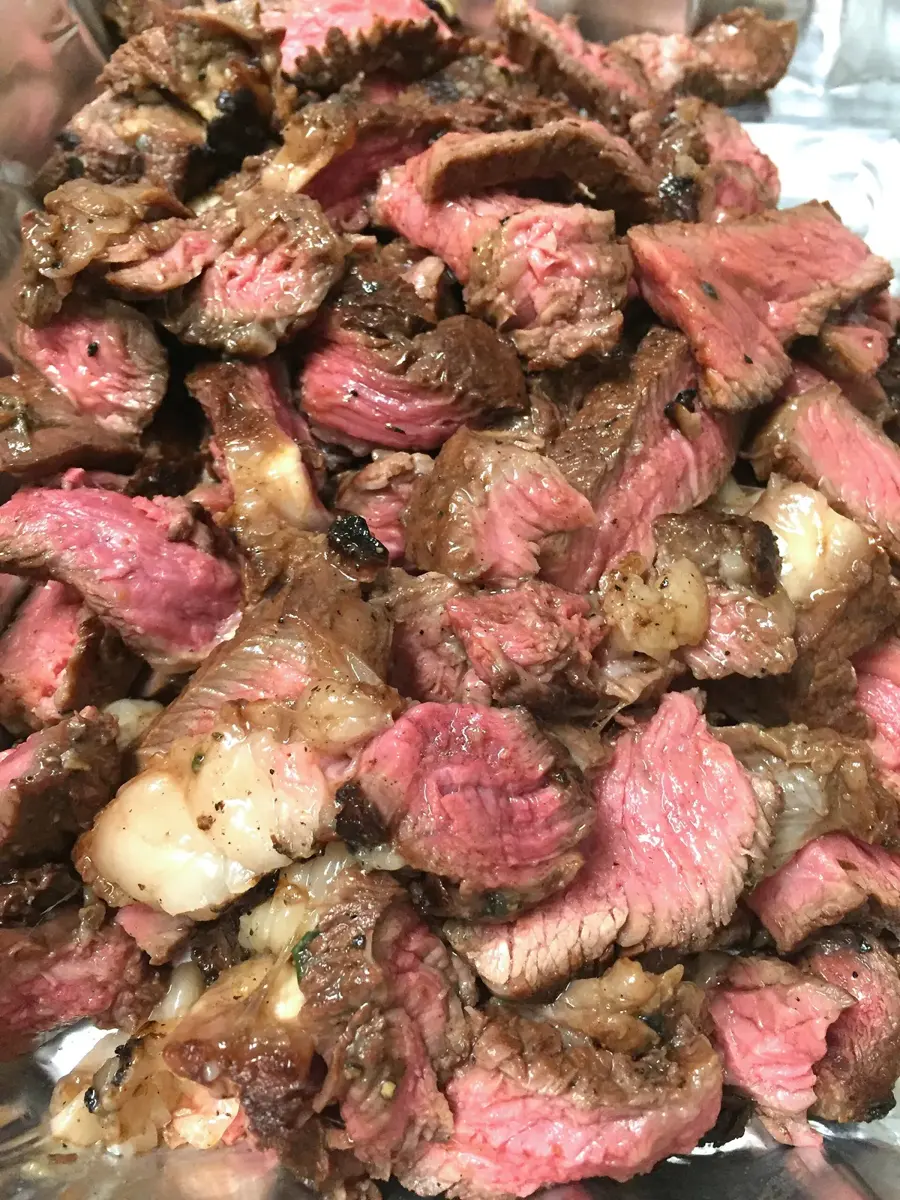
- Slice against the grain and finish with flaky salt.
Doneness guide
| Doneness | Final temp (approx.) | Pull from slow phase |
|---|---|---|
| Rare | 120–125°F | 105–110°F |
| Medium-rare | 130–135°F | 115–120°F |
| Medium | 140–145°F | 125–130°F |
| Medium-well | 150–155°F | 135–140°F |
The USDA recommends cooking whole cuts of beef to an internal temperature of 145°F followed by a three-minute rest. Many steak lovers prefer lower temperatures; that's a personal choice, and it's worth knowing the official guidance.
Common mistakes
- Skipping the thermometer. The method depends on hitting a number.
- A lukewarm sear. If the surface isn't very hot, you'll keep cooking the interior while you wait for a crust.
- Wet surfaces. Pat the steak dry before the sear if any moisture has collected.
- Cooking thin steaks this way. It's overkill below an inch.
Smoke for flavor
If you do the slow phase on a smoker or with a chunk of hardwood on the coals, the steak picks up light smoke flavor. Oak and hickory are classic with beef; go easy, because steak cooks quickly compared to barbecue and only needs a whisper.
Pairing
A reverse-seared ribeye is about as rich as dinner gets. If you're having a cigar afterward, our cigar and ribeye pairing guide has ideas (21+).
Grilling gear we'd recommend (placeholder)
Placeholder — not live affiliate links
- [Instant-read thermometer — retailer placeholder]
- [Kamado / pellet grill — retailer placeholder]
- [Butcher paper & knives — retailer placeholder]
- [Steak delivery service — placeholder]
Affiliate disclosure: Red Meat & Cigar Club may earn a commission from some links on this site at no extra cost to you. Learn more.