
Classic Car Reviews · Profile & review in progress
Porsche 911 (air-cooled era)
The rear-engine icon produced with air-cooled engines through 1998.
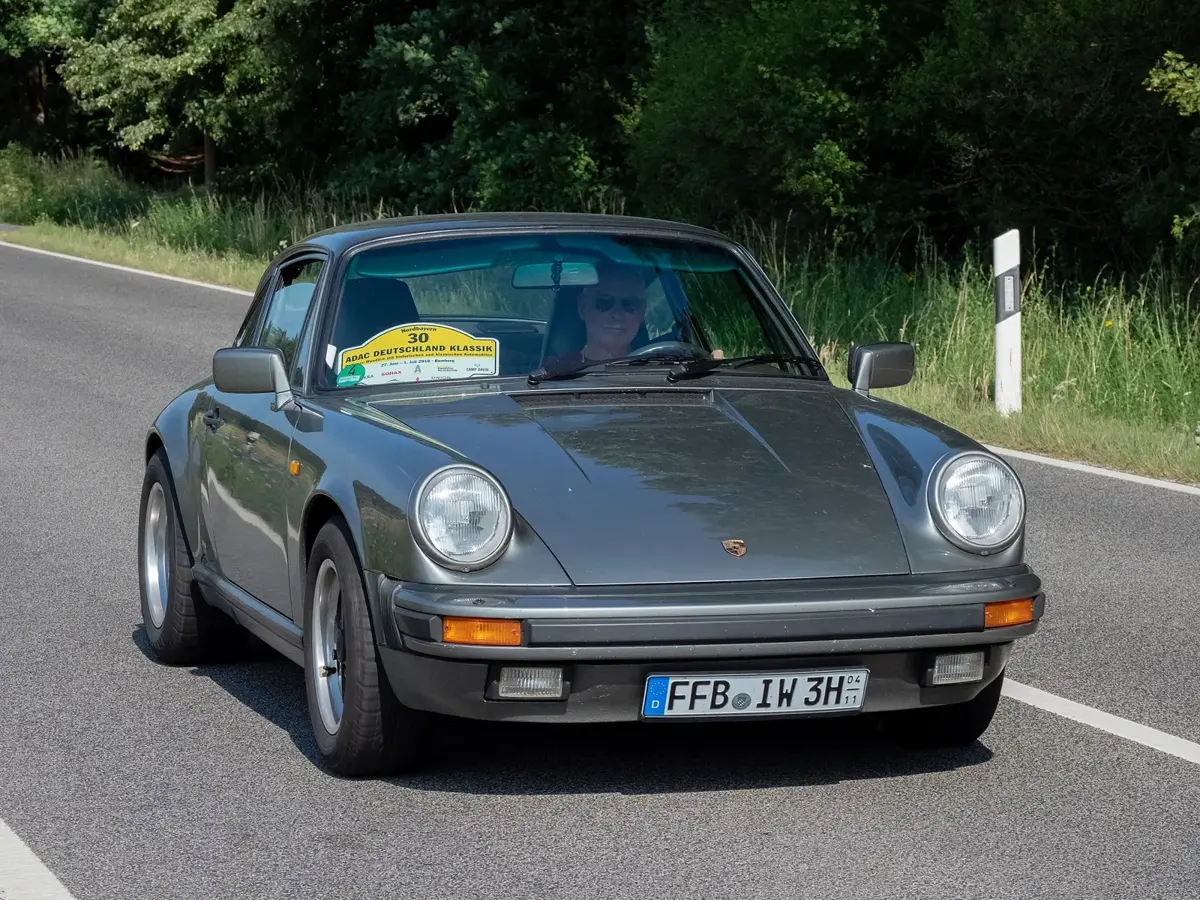
The Porsche 911 is one of the longest-running and most successful sports cars in history. For its first 35 years, it used air-cooled flat-six engines, and those cars — collectively known as the air-cooled era — have become some of the most sought-after enthusiast cars in the world. Here's the background ahead of our review.
Origins
Porsche introduced its new sports car at the Frankfurt Motor Show in 1963 as the 901, designed largely by Ferdinand Alexander "Butzi" Porsche, grandson of the company's founder. Peugeot objected to the name because it held French trademark rights to car names with a zero in the middle, and Porsche renamed the car 911 before production began in 1964. The 911 replaced the 356 and kept its rear-engine layout, with a 2.0-liter air-cooled flat-six.
The generations
- Original 911 (1964–1973): the early cars, including the lightweight 911 S and the 1973 Carrera RS 2.7, with its ducktail spoiler, now a blue-chip collectible.
- G-series (1974–1989): added large impact bumpers to meet U.S. safety regulations. Includes the 911 SC and the Carrera 3.2 (1984–1989).
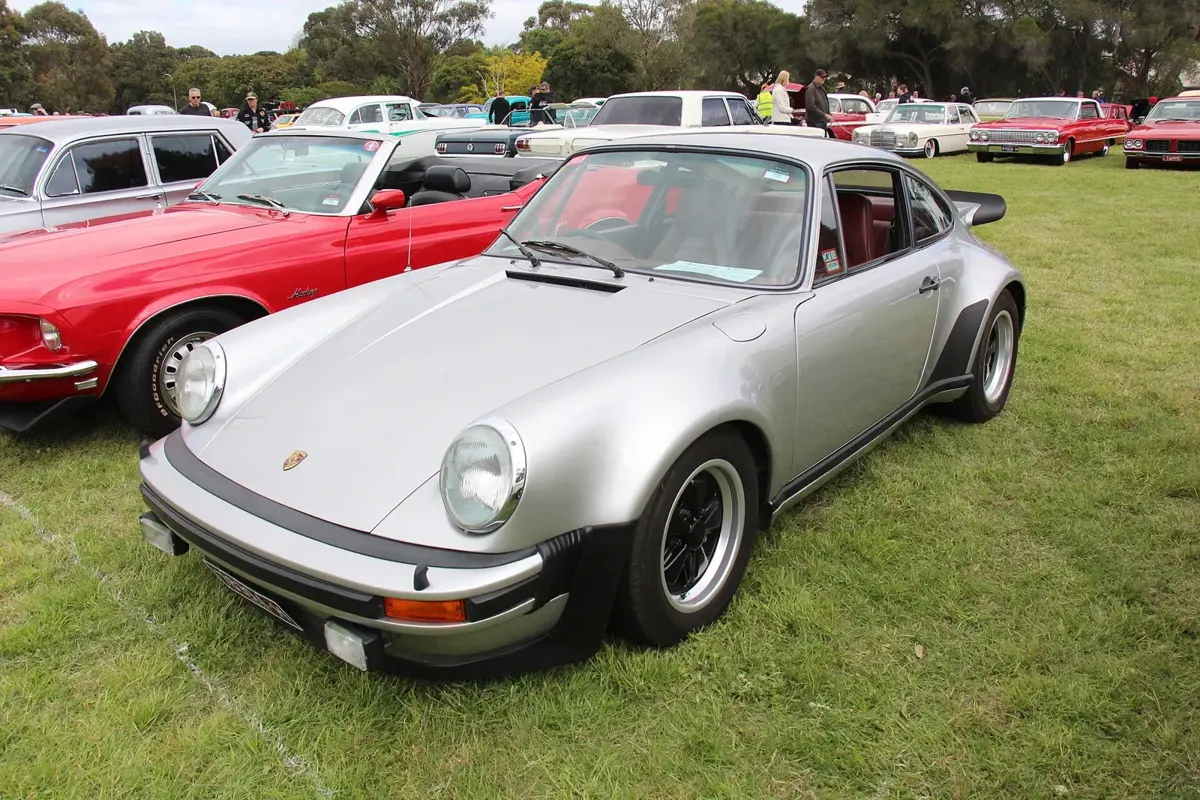
- 930 Turbo (introduced 1975): a turbocharged 911 with flared fenders and a large rear wing, notorious for its turbo lag and demanding handling.
- 964 (1989–1994): a heavily updated car with power steering, ABS, and the first all-wheel-drive Carrera 4.
- 993 (1994–1998): the last air-cooled 911, with a new multi-link rear suspension and smoother styling. Often considered the most refined air-cooled 911.
In 1998, the water-cooled 996 replaced the 993, ending the air-cooled era. Enthusiasts have since given the air-cooled cars almost mythical status.
Why air-cooled matters
Air-cooled engines rely on fan-driven airflow over finned cylinders rather than liquid coolant. They have a distinctive sound and mechanical character. Over time, tightening emissions and noise regulations and the demand for more power made air cooling harder to sustain, prompting Porsche's switch to water cooling.
Rear-engine handling
With the engine behind the rear axle, the 911 has strong traction under acceleration and braking but a tendency toward oversteer if the driver lifts off the throttle mid-corner — "lift-off oversteer." Early 911s were known for demanding respect at the limit; later generations reduced this through suspension development, wider tires, and electronic aids. See our guide to engine layouts.
What we'll evaluate
- Design: styling, interior, and details by generation.
- Driving character: steering feel, engine response, handling.
- Ownership and parts: availability, specialist support, and costs.
- Collectibility: market interest by model.
Buying considerations
- Pre-purchase inspection by a Porsche specialist is essential, including a leak-down test and compression test.
- Known issues vary by generation: early 911s can suffer from rust; some 1970s 2.7-liter engines had head-stud problems; 964s can have dual-mass flywheel and oil-leak issues; and 993 owners watch for secondary air injection problems.
- Documentation: a Porsche Certificate of Authenticity confirms original specification.
- Market: values rose sharply in the 2010s, and modified "backdate" and restomod cars are common. Know what you're buying.
- Community: the Porsche Club of America has an active Rocky Mountain region with track and social events.
Status
No ratings have been assigned. We'll score after the hosts have driven examples.
Which era?
Air-cooled 911 buyers often weigh character against usability: early cars are lighter and rawer; 964s and 993s offer more comfort and modern features. Carrera 3.2s are often cited as a sweet spot for durability. Test-driving several generations is the best way to decide.
Ratings
Ratings are editorial opinions and will be added once the hosts have spent time with this car. No scores have been assigned yet.
The verdict
Coming soon.
Where to find it (placeholder)
Placeholder — not live affiliate links
- [Retailer / dealer placeholder]
Affiliate disclosure: Red Meat & Cigar Club may earn a commission from some links on this site at no extra cost to you. Learn more.