
Watch Reviews · Profile & review in progress
Omega Speedmaster Professional
The manual-wind chronograph associated with NASA and the Apollo missions.
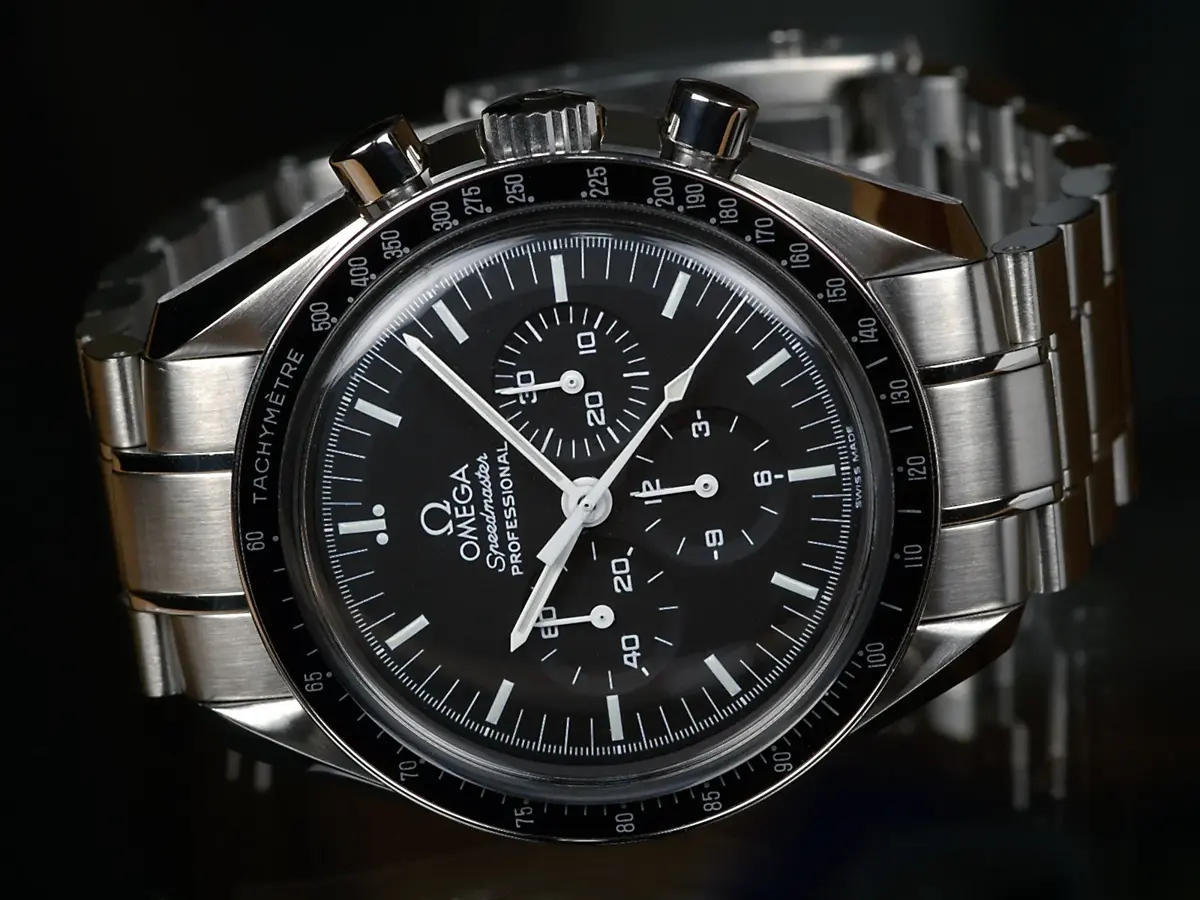
Few watches have a story like the Omega Speedmaster Professional. Designed as a racing chronograph, chosen by NASA, worn on the Moon, and still in production, the "Moonwatch" is one of the most important watches ever made. Here's the background ahead of our hands-on review.
History
Omega introduced the Speedmaster in 1957 (reference CK2915) as a sports and racing chronograph with a tachymeter scale engraved on the bezel — an innovation at the time. It used the manual-wind Calibre 321, a column-wheel chronograph movement.
In the early 1960s, astronauts were wearing a variety of watches. NASA formally tested chronographs from several brands in 1964 and 1965, subjecting them to extreme heat and cold, vacuum, humidity, shock, acceleration, pressure, and vibration. On March 1, 1965, the Speedmaster was qualified for all crewed space missions. Astronaut Ed White wore one on the first American spacewalk during Gemini 4 in June 1965.
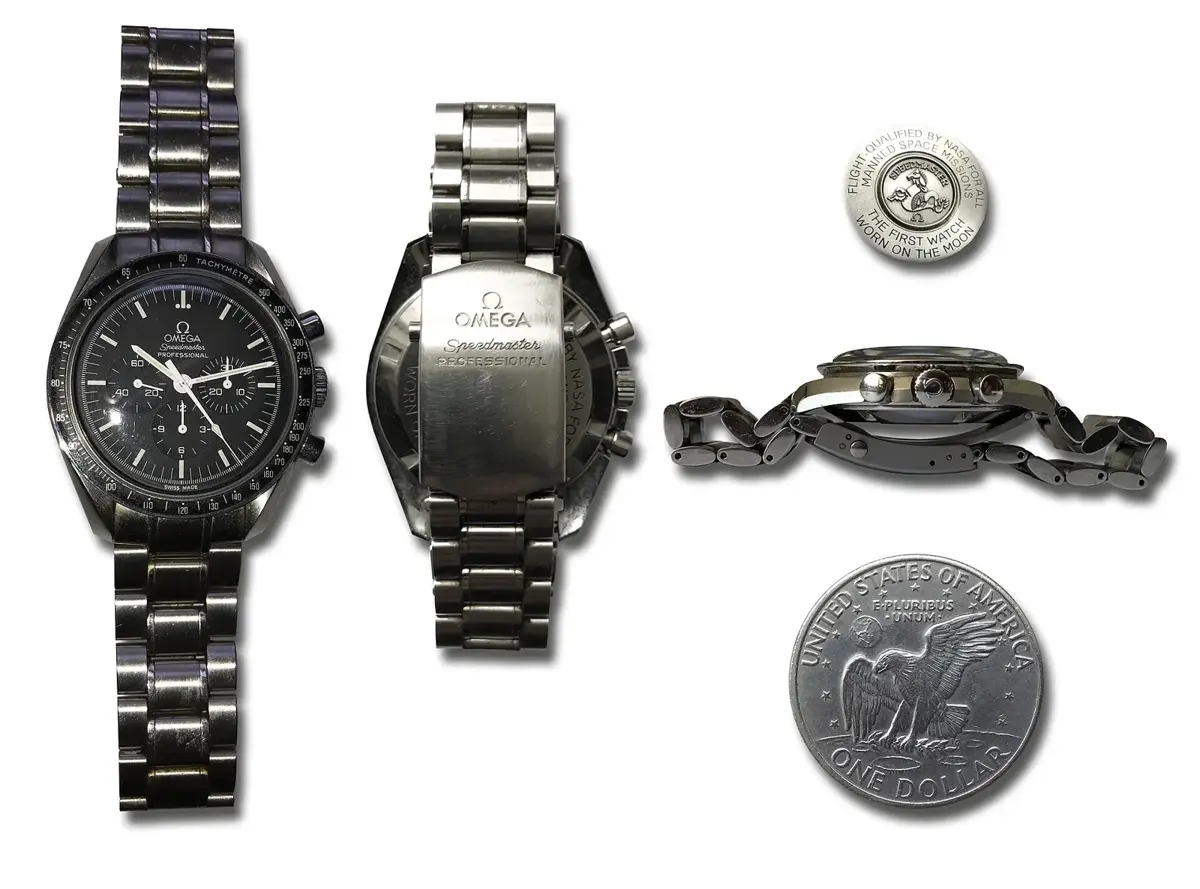
On July 20, 1969, Buzz Aldrin wore his Speedmaster on the lunar surface during Apollo 11. (Neil Armstrong left his inside the lunar module as a backup for the module's malfunctioning electronic timer.) During the Apollo 13 emergency in 1970, astronauts used a Speedmaster to time a crucial 14-second engine burn to correct their trajectory. NASA later honored Omega with its Snoopy Award.

The movements
- Calibre 321 (1957–1968): the original column-wheel movement, now revived by Omega in limited models.
- Calibre 861 (from 1968): a cam-actuated movement that was simpler to produce; flight-qualified by NASA in 1978 for the Space Shuttle program.
- Calibre 1861 and 1863 (from 1996): evolutions of the 861 with rhodium plating.
- Calibre 3861 (from 2021): introduced in January 2021, with Omega's Co-Axial escapement, a silicon balance spring, Master Chronometer certification (including resistance to magnetic fields of 15,000 gauss), and a 50-hour power reserve, while remaining manual-wind.
Design and specifications (current Moonwatch)
- Case: 42 mm stainless steel with the Speedmaster's asymmetric case shape and protected pushers.
- Dial: black step dial with three sub-dials, luminous hands and markers.
- Bezel: black aluminum tachymeter with the "dot over 90" detail recalling early models.
- Crystal: offered with either Hesalite (acrylic, as used historically in space because it won't shatter into shards) or sapphire crystal with a sapphire caseback.
- Water resistance: 50 meters.
What we'll evaluate
- Design: legibility, proportions, finishing, and heritage details.
- Movement: winding feel, chronograph action, accuracy.
- Wearability: fit, comfort, bracelet and strap options.
- Value: price relative to alternatives and historical significance.
Things to know before buying
- Hesalite vs. sapphire: Hesalite is lighter, warmer, and true to history but scratches more easily (though scratches can be polished out). Sapphire resists scratches and shows off the movement through the caseback.
- Manual winding: you'll need to wind it regularly; see our care guide.
- Vintage market: early Speedmasters, especially pre-Moon references, are highly collectible, with significant attention paid to originality. Buy from specialists.
- Variants: Omega offers many Speedmaster variations; the "Moonwatch Professional" is the core model with the NASA heritage.
Status
No ratings have been assigned. We'll publish scores once the hosts have worn the watch for a meaningful stretch.
Why it endures
Part of the Speedmaster's appeal is that the core design has changed so little. A 1960s Speedmaster and a current Moonwatch are immediately recognizable as the same watch. That continuity, combined with documented use in the space program, makes it one of the few luxury watches with genuine historical credentials rather than just marketing ones.
Ratings
Ratings are editorial opinions and will be added once the hosts have spent time with this watch. No scores have been assigned yet.
The verdict
Coming soon.
Where to find it (placeholder)
Placeholder — not live affiliate links
- [Retailer / dealer placeholder]
Affiliate disclosure: Red Meat & Cigar Club may earn a commission from some links on this site at no extra cost to you. Learn more.