
Watches · Red Meat & Cigar Club editorial
Dive Watches Explained
Rotating bezels and real water resistance.
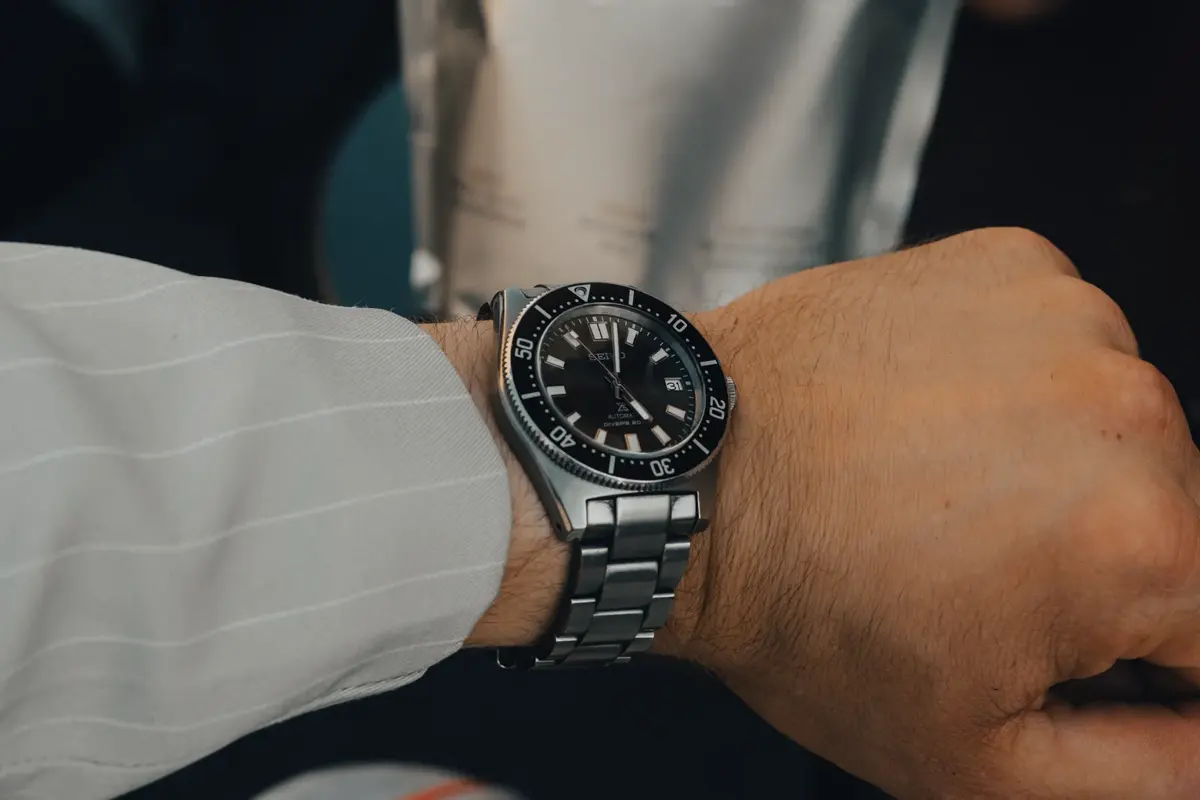
The dive watch may be the most popular style in watchmaking. It was built for a specific job — tracking time underwater, when an error could be fatal — and that function produced a design that's rugged, legible, and good-looking on land or sea.
The birth of the dive watch
Water-resistant watches existed before the 1950s, notably the Rolex Oyster case of 1926 and Omega's Marine of 1932. But the modern dive watch took shape in the early 1950s alongside the rise of recreational scuba diving. Blancpain introduced the Fifty Fathoms in 1953, developed with input from French naval combat divers. Rolex presented the Submariner in 1953, with a rotating bezel and water resistance to 100 meters. Both are considered foundational designs. See our Submariner entry.
Key features
- Unidirectional rotating bezel: a diver aligns the zero marker with the minute hand at the start of a dive and reads elapsed time. The bezel turns only counterclockwise, so an accidental bump can only make it appear more time has passed — the safe direction.
- Luminous hands and markers: readable in dark water. Early watches used radium, later replaced by tritium and then by modern non-radioactive luminous materials like Super-LumiNova.
- Screw-down crown: seals the case.
- Sturdy case and crystal: sapphire crystals are common on modern pieces.
- Extension clasps or straps to fit over a wetsuit.
ISO 6425
The International Organization for Standardization publishes ISO 6425, the standard for divers' watches. It specifies requirements including water resistance testing (with a safety margin beyond the rated depth), the time-preset bezel, legibility in darkness, magnetic and shock resistance, and others. Watches that meet it may be marked "DIVER'S" followed by the depth. Many dive-style watches are not ISO-certified, and that's fine for most people.
Understanding water-resistance ratings
Water-resistance numbers are measured under static laboratory pressure, not real-world conditions. As a general guide, a watch rated 30 meters is splash-resistant, 50 meters suits light swimming, 100 meters handles swimming and snorkeling, and 200 meters or more is appropriate for recreational scuba diving. Always screw down the crown, never operate the crown or pushers underwater unless designed for it, and have water resistance checked periodically, because gaskets age.
Saturation diving and helium valves
Professional saturation divers live in pressurized chambers breathing gas mixtures containing helium. Helium atoms can seep into a watch case, and during decompression the pressure inside can pop the crystal off. Helium escape valves, introduced in the late 1960s by Rolex and Doxa, solved this. Most recreational divers will never need one.
Icons and alternatives
Notable dive watches include the Rolex Submariner, Blancpain Fifty Fathoms, Omega Seamaster (including the Seamaster 300 and Diver 300M), Tudor Black Bay and Pelagos, and Seiko's long line of divers, which earned a strong reputation for reliability and value, beginning with its first diver in 1965. Doxa's orange-dial SUB, released in 1967, was designed for legibility underwater.
Do divers still use them?
Dive computers have largely replaced watches as primary dive instruments. Still, many divers wear a mechanical dive watch as a backup, and the style is beloved by people who've never been scuba diving. That's fine — the features that make a great dive watch also make a durable, legible everyday watch.
Watch gear (placeholder)
Placeholder — not live affiliate links
- [Watch roll / case — placeholder]
- [Watch winder — placeholder]
- [Authorized dealer / pre-owned retailer — placeholder]
Affiliate disclosure: Red Meat & Cigar Club may earn a commission from some links on this site at no extra cost to you. Learn more.